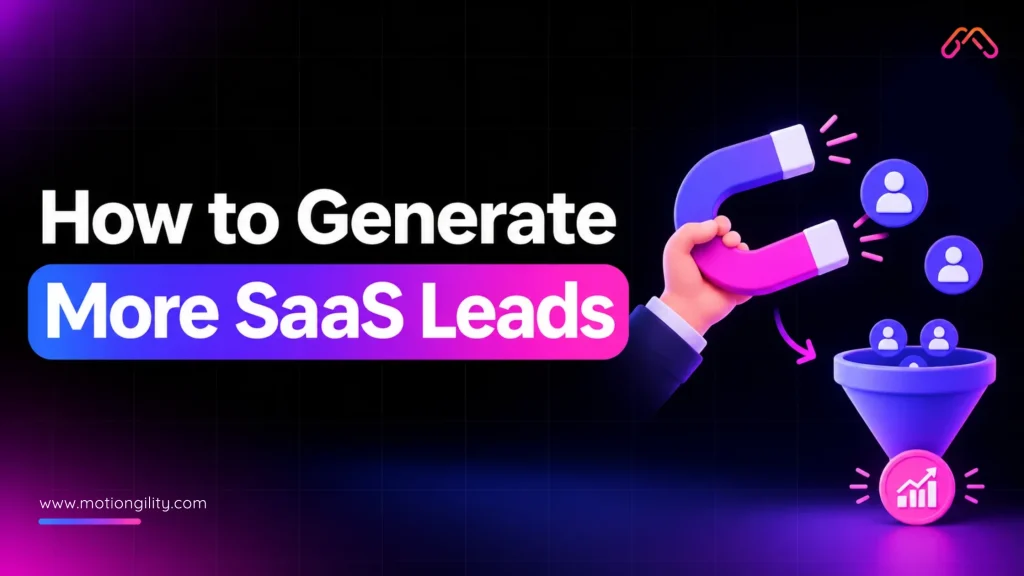
Generating leads is one of the biggest challenges for SaaS companies. You may have a powerful software product, a professional website, and a skilled sales team, but attracting potential customers who are genuinely interested in your solution requires the right strategy.
The challenge is not simply getting more website visitors. It is reaching the right audience, communicating your product’s value, and encouraging prospects to take the next step. Without a clear lead generation process, marketing efforts can generate traffic without producing enough qualified leads or sales opportunities.
To improve results, SaaS businesses need a combination of search engine optimization (SEO), targeted content, landing page optimization, email marketing, and product-focused communication. Video marketing can also help simplify complex software features and give potential customers a clearer reason to engage with your business.
According to Wyzowl’s Video Marketing Statistics 2026, 85% of surveyed video marketers said video had helped generate leads. Although results vary by business and campaign, this finding shows why video can be a valuable part of a broader lead generation strategy.
In this guide, we will explore six practical ways to generate more SaaS leads and turn interested prospects into potential customers.
1. Define Your Ideal SaaS Customer Before Generating Leads
Before investing in marketing campaigns, identify the people and businesses most likely to benefit from your software. Trying to attract everyone can waste resources and bring in leads that are unlikely to convert.
Your ideal customer profile (ICP) should describe the type of company that experiences the problem your product solves. Depending on your SaaS offering, this could include company size, industry, location, business model, team structure, and technology requirements.
For example, a project management platform designed for growing software companies may target product managers, operations leaders, and development teams. A finance automation platform might focus on finance managers and small-business owners who want to reduce manual reporting.
Once you understand your ideal customers, you can create marketing messages that speak directly to their needs.
Understand your audience's challenges
Ask questions such as:
- What problem does the customer need to solve?
- What makes the problem expensive, time-consuming, or frustrating?
- Which features would help them achieve their goals?
- What concerns might prevent them from purchasing?
- Who makes or influences the buying decision?
Use customer interviews, sales conversations, support tickets, and website analytics to identify recurring patterns.
You can then create separate messages for different audience segments instead of using one generic value proposition for everyone.
Pro tip: Describe the outcome your software helps customers achieve, not just the features it provides. Prospects are more likely to pay attention when they can connect your solution with a real business need.
2. Use SEO and Helpful Content to Attract Qualified Leads
Search engine optimization helps your SaaS company reach people who are already looking for solutions to specific problems. Unlike campaigns that depend entirely on paid promotion, useful organic content can continue attracting relevant visitors over time.
However, ranking for broad keywords is not enough. Your content should match the search intent behind each query and guide readers toward an appropriate next step.
For example, a company offering customer support software could target searches related to managing support tickets, automating customer service, or improving response times. These topics allow the business to demonstrate its expertise while introducing relevant product capabilities.
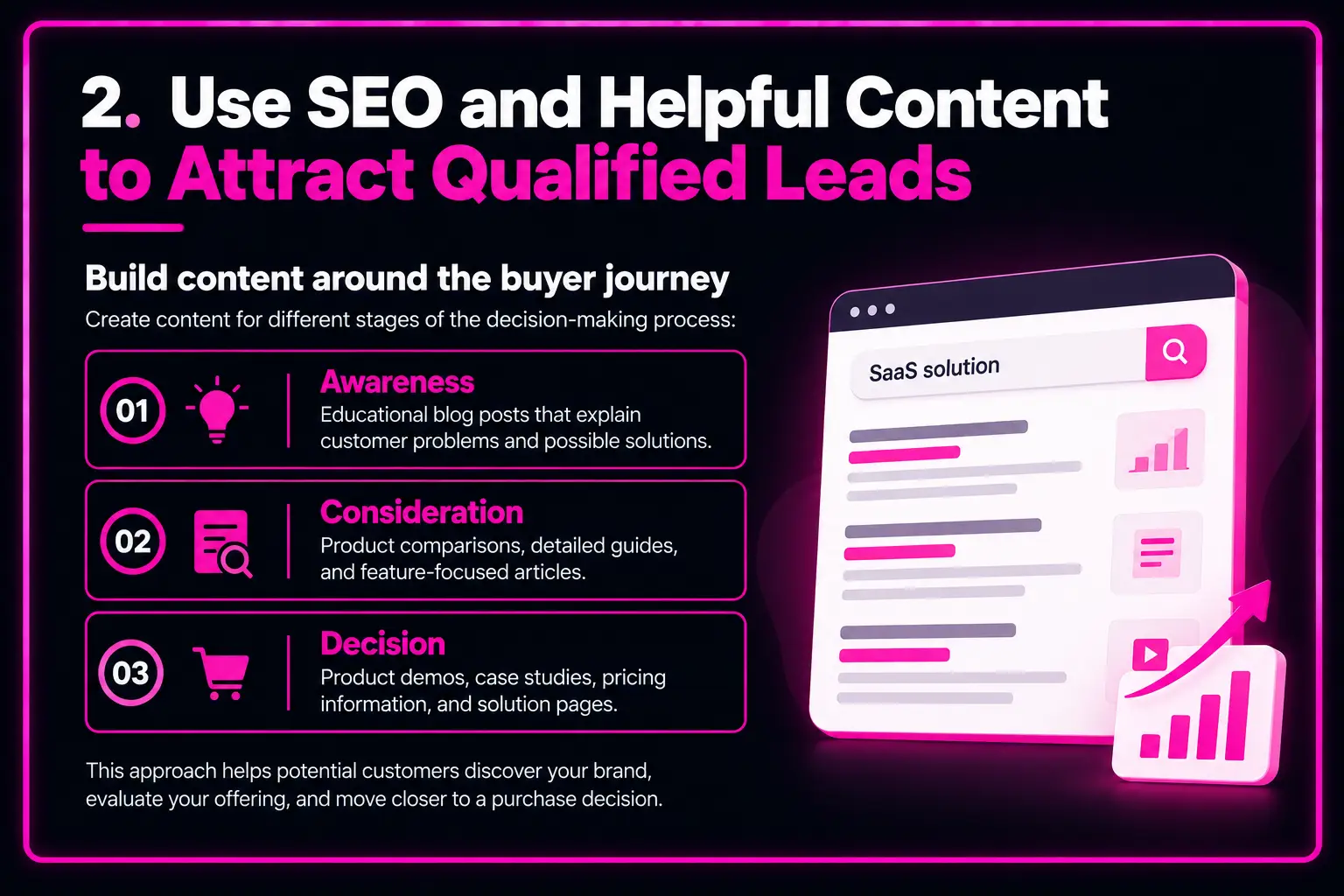
Build content around the buyer journey
Create content for different stages of the decision-making process:
- Awareness: Educational blog posts that explain customer problems and possible solutions.
- Consideration: Product comparisons, detailed guides, and feature-focused articles.
- Decision: Product demos, case studies, pricing information, and solution pages.
This approach helps potential customers discover your brand, evaluate your offering, and move closer to a purchase decision.
Optimize content for conversions
Every important blog post should have a logical next step. Depending on the topic, invite readers to explore a relevant product page, request a demo, start a free trial, or speak with your team.
Use descriptive headings, relevant internal links, clear calls to action, and fast-loading pages. Add FAQs that answer genuine customer questions, and keep the content focused on one primary search intent.
SEO brings opportunities to attract potential customers, but the landing page and offer determine whether those visitors take action.
3. Create SaaS Videos That Explain Your Product Clearly
SaaS products can be difficult to explain, particularly when they include advanced dashboards, integrations, automation, analytics, or AI-powered features. If prospects cannot quickly understand how your software works, they may leave your website without exploring it further.
Video marketing provides another way to communicate product value. A well-structured explainer video can introduce a problem, demonstrate your solution, and show why the product matters to the intended audience.
For example, imagine a SaaS company offering automated reporting software. A written description might list data integrations, customizable dashboards, and reporting features. A product video can show how information moves from different platforms into one dashboard and how users generate reports with less manual effort.
This makes the product easier to understand and helps prospects connect features with practical business outcomes.
Choose a video format that supports your goal
Different formats serve different purposes:
- SaaS explainer videos: Communicate the product’s value proposition in a simple, engaging way.
- Product demo videos: Show the interface and demonstrate important workflows.
- Feature videos: Explain a specific capability and the problem it solves.
- Customer testimonial videos: Share genuine customer experiences when permission and verified feedback are available.
- Product launch videos: Introduce new software, features, or major updates.
For lead generation, place relevant videos on high-intent landing pages, product pages, and demo-request pages. You can also distribute shorter versions through LinkedIn, YouTube, and email campaigns.
Turn video engagement into leads
A video should not simply entertain viewers. Connect it to a useful next step, such as booking a demo, exploring a feature page, or starting a trial.
For example, a video explaining how your platform automates repetitive tasks could end with an invitation to see the workflow in a personalized demonstration.
If your software needs a clearer, more persuasive presentation, explore MotionGility’s video solutions. Professional video production can help SaaS brands turn complex product information into content that supports marketing and sales objectives.
4. Optimize Your Landing Pages for Lead Conversion
Even if your SaaS company attracts qualified traffic, you may lose potential customers if your landing pages are confusing or difficult to navigate.
A landing page should immediately communicate what your product does, who it helps, and why a visitor should care. Visitors should not have to search through multiple sections to understand your main offer.
Start with a clear headline that focuses on a customer outcome. Follow it with a concise explanation, relevant product benefits, and a visible call to action.
For example, instead of using a vague headline such as “The Future of Business Productivity,” a workflow automation platform could explain that it helps teams reduce repetitive manual tasks and manage processes more efficiently.
Essential elements of a SaaS landing page
A clear value proposition: Explain the main problem your product solves and how it helps.
Relevant product visuals: Use screenshots, interface demonstrations, or an explainer video to show how the product works.
Evidence that builds trust: Include genuine testimonials, verified customer results, security information, or integrations where relevant.
A focused call to action: Offer a meaningful next step, such as “Book a Demo,” “Start Your Free Trial,” or “See How It Works.”
A simple form: Ask only for information you genuinely need at that stage of the buyer journey.
Avoid overwhelming visitors with too many competing offers. A page designed to generate demo requests should keep that objective clear throughout the experience.
You can also test different headlines, video placements, CTA wording, and form lengths. Compare conversion rates over a meaningful period rather than making decisions based on a few visits.
5. Combine Email Marketing With Lead Nurturing
Not every prospect is ready to purchase the first time they discover your SaaS product. Some are researching solutions, comparing competitors, or waiting for budget approval.
Lead nurturing helps maintain communication with these prospects while providing information that supports their decision-making process.
Email marketing is useful for this purpose because it allows you to share relevant content based on a prospect’s interests and actions.
For example, someone who downloads a guide about workflow automation may appreciate an email explaining common automation challenges. A prospect who watches a product demonstration may be more interested in a detailed feature guide or an invitation to book a demo.
Build a useful lead-nurturing sequence
A simple sequence might include:
- Welcome email: Deliver the promised resource and introduce your company.
- Educational email: Explain a common problem your audience experiences.
- Product-focused email: Demonstrate how your software addresses that problem.
- Proof-focused email: Share a genuine case study or customer example, if available.
- Conversion email: Invite the prospect to book a demo, request a consultation, or start a trial.
The sequence should feel helpful rather than overly promotional. Segment subscribers based on their interests, role, industry, and stage in the buying process whenever possible.
You can also repurpose your blog articles, product videos, and FAQs into email content. This creates a consistent message across channels and helps prospects understand your offering from different angles.
Always follow applicable email marketing and data protection requirements, and provide a clear way for recipients to unsubscribe.
6. Use Paid Campaigns, Social Media, and Analytics to Improve Results
Organic marketing can build long-term visibility, but paid campaigns and social distribution can help SaaS companies reach targeted audiences and test new messages more quickly.
Google Ads can target people searching for relevant software solutions. LinkedIn campaigns may help reach specific professional roles or industries, while retargeting can reconnect with eligible visitors who previously interacted with your website.
However, paid traffic becomes expensive when campaigns attract the wrong audience or send visitors to pages that do not match their expectations.
Connect campaigns with relevant content
Match the advertisement to the landing page and the offer. If your ad promotes a product demo, the landing page should make the demo easy to request. If your campaign introduces a specific feature, avoid sending visitors to a generic homepage where they must find that feature themselves.
Video can also support paid and organic campaigns by introducing your product quickly and communicating its benefits visually.
For example, a short video ad could introduce a common challenge faced by sales teams and demonstrate how your SaaS product addresses it. The accompanying landing page can provide more detail and invite interested prospects to book a demonstration.
Measure the metrics that matter
Track your results across the full lead generation process.
Metric | What it helps you understand |
Website traffic | Whether your content and campaigns attract visitors |
Landing page conversion rate | Whether visitors take the intended action |
Cost per lead | How much you spend to acquire a lead |
Marketing-qualified leads | Whether leads meet your marketing criteria |
Sales-qualified leads | Whether prospects are ready for sales engagement |
Lead-to-customer rate | How effectively leads become paying customers |
Customer acquisition cost | How much it costs to acquire a customer |
Do not judge a campaign solely by clicks or the total number of leads. A campaign that generates fewer but better-qualified leads may deliver stronger business results.
Review performance regularly, identify where prospects drop off, and adjust your targeting, content, landing pages, and follow-up process. Over time, this data-driven approach can help you allocate your marketing budget more effectively.
Conclusion
Generating more SaaS leads requires a coordinated strategy that attracts the right audience, explains your product clearly, and gives prospects a compelling reason to take action.
Start by defining your ideal customer and creating content that addresses their specific challenges. Use SEO to attract relevant search traffic, optimize landing pages to improve conversions, and nurture prospects through useful email communication. Paid campaigns and analytics can then help you expand your reach and identify which activities produce the best results.
Video marketing can strengthen this process by making complex software easier to understand and giving potential customers a more engaging way to evaluate your product. When combined with a relevant offer and a clear call to action, product videos can support your wider lead generation efforts.
The key is to connect every marketing activity with a measurable business objective rather than focusing on traffic or engagement alone.
Want to make your SaaS product easier to understand and more compelling to potential customers? Explore MotionGility to learn how professional explainer videos, product demos, and other video content can support your marketing strategy. Create a video that communicates your value clearly and encourages the right prospects to take the next step.
Frequently Asked Questions
1. What is SaaS lead generation?
SaaS lead generation is the process of attracting and identifying potential customers who may be interested in a software-as-a-service product. Common methods include SEO, content marketing, paid advertising, email campaigns, webinars, and product demonstrations.
2. How can a SaaS company generate more leads?
A SaaS company can generate more leads by defining its ideal customer, publishing helpful SEO content, improving landing pages, running targeted advertising campaigns, nurturing prospects through email, and offering useful product demos or trials.
3. How does video marketing help generate SaaS leads?
Video marketing helps explain software features, communicate product benefits, and demonstrate how a solution works. When placed on relevant landing pages or distributed through targeted campaigns, videos can encourage interested prospects to explore a product, request a demo, or start a trial.
4. Which channels are best for SaaS lead generation?
The best channels depend on the product, target audience, and buying process. SEO and content marketing can attract ongoing organic traffic, Google Ads can reach people with relevant search intent, LinkedIn can support B2B targeting, and email marketing can nurture existing prospects.
5. How do you measure SaaS lead generation success?
Measure qualified leads, landing page conversion rates, cost per lead, lead-to-customer conversion rates, customer acquisition cost, and revenue generated. These metrics provide a more useful picture of performance than website traffic or clicks alone.