Imagine signing up for a promising SaaS platform that claims to simplify your workflow.You create an account, log in for the first time, and suddenly face a dashboard filled with unfamiliar menus, buttons, and settings.Instead of feeling excited, you feel confused. Within a few minutes, you close the tab and decide to “try it later”—but that day never comes.
This is a challenge that many SaaS companies face. Getting users to sign up is only the beginning. The real success comes when users understand the product, use its core features, and make it part of their daily workflow. Unfortunately, many businesses lose potential customers because users don’t know how to get started.
A SaaS Tutorial Video solves this problem by showing users exactly how to use the software through simple, visual, step-by-step instructions.
Instead of reading lengthy documentation or searching through help articles, users can watch a short tutorial and quickly learn how to complete important tasks. This creates a smoother onboarding experience, improves customer confidence, and increases product adoption.
Many successful SaaS brands also combine a saas explainer video tutorial with educational content to explain both the product’s value and its functionality.
This approach helps users understand not only what the software does but also how they can use it to solve real business problems.
In this guide, you’ll discover how SaaS Tutorial Videos improve product adoption, why they are essential for customer success, and the best practices for creating videos that keep users engaged from day one.
What Is a SaaS Tutorial Video?
A SaaS Tutorial Video is an educational video designed to teach users how to use a software product effectively. Unlike promotional videos that focus on selling the software, tutorial videos focus on helping users understand the product after they have signed up or started a free trial.
These videos usually include real screen recordings, voice-over explanations, animations, and practical examples that guide users through important workflows. Instead of simply describing features, they demonstrate how those features work in real situations.
For example, if a project management platform introduces a new automation feature, a tutorial video doesn’t just explain that automation exists. It shows users how to create an automation rule, why it saves time, and how it fits into their daily workflow. This practical approach makes learning much easier and encourages users to explore more features.
A well-planned SaaS Tutorial Video also reduces the learning curve. When users understand the software quickly, they are more likely to stay engaged, complete onboarding, and become long-term customers.
SaaS Tutorial Video vs. SaaS Product Demo Video
Although these terms are often used interchangeably, they serve different purposes. A saas product demo video tutorial is primarily designed for potential customers. It highlights the software’s features, benefits, and unique selling points to encourage sign-ups or purchases. Its goal is to answer the question, “Why should I choose this product?”
A SaaS Tutorial Video, on the other hand, focuses on education. It answers the question, “How do I use this product successfully?” Rather than convincing users to buy, it helps them achieve results after they’ve already started using the software.
Many SaaS companies use both formats together. A product demo attracts users, while tutorial videos help those users become confident and active customers. This combination creates a seamless customer journey from awareness to adoption.
Why SaaS Tutorial Videos Are Essential for Product Adoption
Product adoption doesn’t happen automatically after a user signs up. People continue using software only when they experience value quickly and understand how it helps them achieve their goals.
This is where SaaS Tutorial Videos make a measurable difference.
Instead of asking users to figure everything out themselves, tutorial videos provide clear guidance at every stage of the learning process. Users can pause, replay, and follow each step at their own pace, making the experience less overwhelming and far more effective than reading long help documents.
When customers learn through video, they gain confidence in using the platform. They begin exploring more features, complete important actions sooner, and integrate the software into their daily routine. These behaviours directly contribute to higher product adoption and improved customer retention.
For SaaS businesses, this means happier users, fewer support requests, and stronger long-term growth
How Visual Learning Improves User Experience
Most people learn faster by watching rather than reading. Visual demonstrations help users understand software interfaces, workflows, and processes much more quickly than written instructions.
A high-quality SaaS Tutorial Video combines screen recordings, clear narration, on-screen highlights, and simple animations to create an engaging learning experience. Instead of imagining where to click or what a feature looks like, users see every step in real time.
This approach reduces mistakes, saves time, and gives users the confidence to use the software independently. As a result, they are more likely to continue exploring the product and using advanced features.
Businesses that also create a saas explainer video tutorial before detailed tutorials often see even better engagement because users first understand why the product matters before learning how to use it.
How SaaS Tutorial Videos Boost Product Adoption
The primary goal of every SaaS company is to help users reach their first successful outcome as quickly as possible. The sooner users experience value, the more likely they are to continue using the software and eventually become loyal customers.
A SaaS Tutorial Video accelerates this process by removing uncertainty and making the learning experience simple.
Faster User Activation
The first few minutes after a user signs up are critical. If they cannot understand how to perform basic actions, they may abandon the product before discovering its true value.
Tutorial videos guide users through those first important steps in a clear and engaging way. Instead of feeling lost, users know exactly what to do next, helping them reach their first success much faster.
Better Feature Adoption
Many SaaS platforms invest significant resources in developing powerful features, yet a large percentage of users never discover them.
Tutorial videos naturally introduce these features by demonstrating how they solve real problems. Rather than listing capabilities, they show practical workflows that encourage users to explore the product more deeply.
As users become familiar with additional tools, they gain more value from the software, increasing overall product adoption.
Reduced Customer Frustration
Confusion is one of the biggest reasons users stop using SaaS products.
When users encounter obstacles without clear guidance, frustration builds quickly. A well-structured SaaS Tutorial Video answers common questions before they become major problems. Instead of submitting support tickets or searching through lengthy documentation, users can watch a short video and immediately continue their work.
This creates a smoother customer experience while allowing support teams to focus on more complex issues.
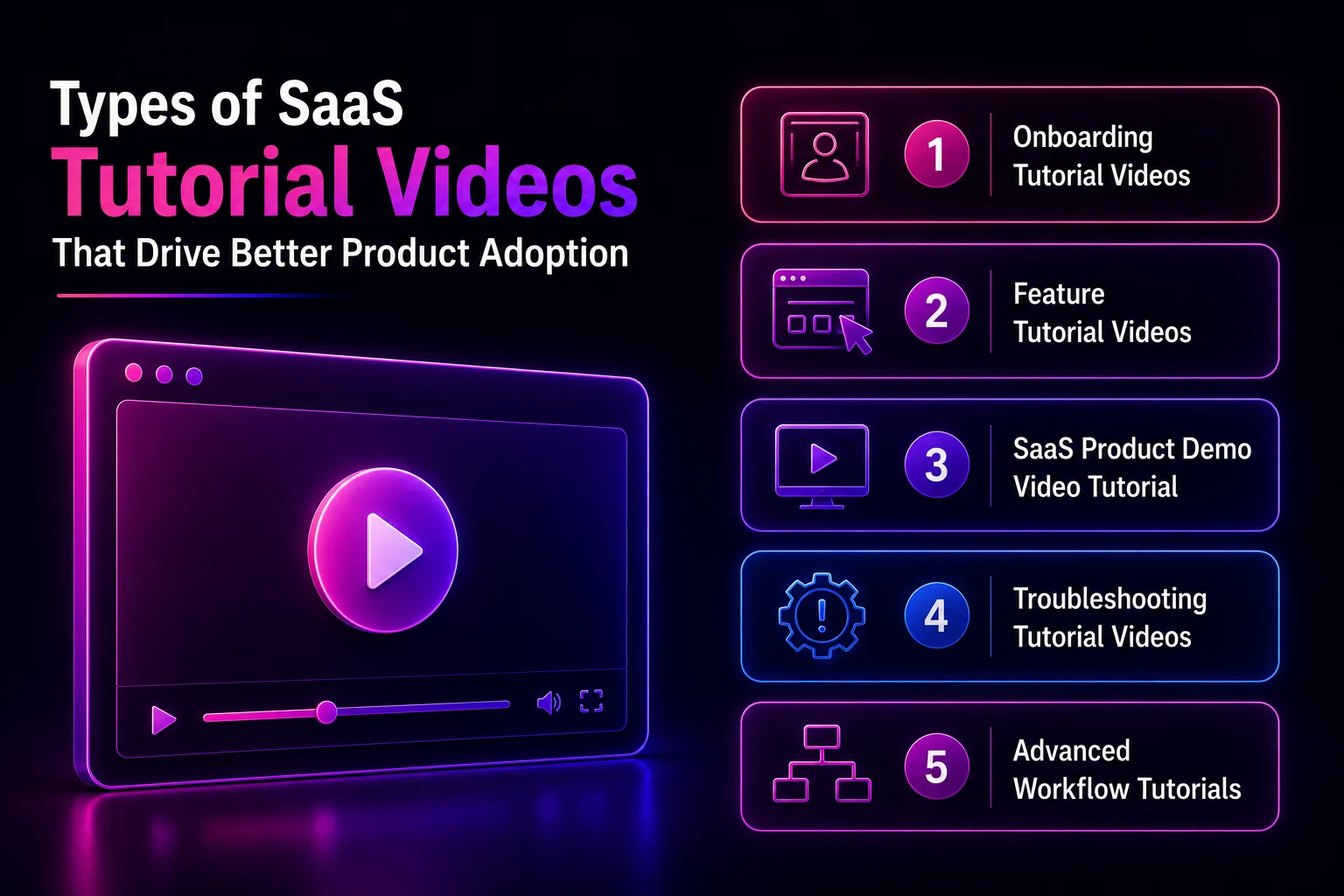
Types of SaaS Tutorial Videos That Drive Better Product Adoption
Not every user interacts with your software in the same way. A new customer needs guidance during onboarding, while an existing customer may want to explore advanced features or solve a specific problem.
That’s why creating different types of SaaS Tutorial Videos is essential. Each video should address a particular stage of the customer journey and help users achieve a specific goal.
Instead of producing one lengthy tutorial, SaaS companies should build a collection of focused educational videos that users can access whenever they need help.
Onboarding Tutorial Videos
The onboarding stage is where users form their first impression of your software. If they struggle to understand the interface or complete the initial setup, they may abandon the product before experiencing its real value.
An onboarding SaaS Tutorial Video introduces users to the platform in a simple and structured way. It explains how to set up an account, navigate the dashboard, and complete the first important task. The objective isn’t to explain every feature but to help users reach their first success as quickly as possible.
When users achieve results early, they feel more confident using the product and are more likely to continue exploring additional features.
Feature Tutorial Videos
As your software evolves, new features are added regularly. However, many customers never discover these updates because they don’t know where to find them or how they work.
Feature-specific tutorial videos solve this problem by focusing on one feature at a time. Rather than overwhelming users with too much information, these videos explain the purpose of the feature, demonstrate how to use it, and show the value it provides in real-world situations.
For example, if your SaaS platform introduces workflow automation, the tutorial should demonstrate how users can automate repetitive tasks instead of simply describing the feature. This practical approach encourages users to adopt advanced functionality and gain more value from your product.
SaaS Product Demo Video Tutorial
Although a saas product demo video tutorial is often associated with marketing, it also plays an important role in customer education.
Unlike traditional sales demos that only highlight product benefits, a product demo tutorial explains how users can perform actual tasks inside the software. It combines product promotion with practical learning, making it especially useful for free-trial users who are still evaluating the platform.
This type of video helps bridge the gap between interest and action. Instead of only telling users what your software can do, it shows them how to accomplish meaningful tasks using the product.
As users experience the product’s capabilities firsthand, they become more confident and are more likely to convert into paying customers.
Troubleshooting Tutorial Videos
Even experienced customers occasionally encounter challenges. Whether it’s connecting an integration, importing data, or resolving login issues, users appreciate quick solutions that don’t require contacting support.
Troubleshooting videos provide immediate answers to common problems. Because users can watch these tutorials whenever they need assistance, they spend less time searching through documentation and more time using the software productively.
This not only improves customer satisfaction but also reduces the workload on your support team.
Advanced Workflow Tutorials
Once customers become comfortable with the basics, they naturally look for ways to increase efficiency.
Advanced tutorial videos help experienced users unlock the full potential of your software by demonstrating automation techniques, integrations, reporting features, and productivity workflows.
These tutorials encourage users to rely more heavily on your platform, making it an essential part of their daily operations. The deeper users integrate your software into their workflow, the less likely they are to switch to a competitor.
Best Practices for Creating an Effective SaaS Tutorial Video
Creating tutorial videos isn’t just about recording your screen. The most successful videos are carefully planned with the user in mind. Every tutorial should solve a real problem while keeping the learning experience simple and engaging.
One of the biggest mistakes SaaS companies make is trying to explain everything in a single video. Instead, each tutorial should focus on one objective. A short, focused video is much easier to understand than a long presentation covering multiple topics.
Another important factor is storytelling. Even educational content should guide viewers through a logical journey. Start by introducing the problem, explain why it matters, demonstrate the solution, and finish by showing the outcome. This structure keeps users engaged and helps them remember what they’ve learned.
Visual clarity is equally important. Cursor highlights, zoom effects, annotations, and smooth transitions direct attention to the most important areas of the interface. These small design elements make tutorials easier to follow, especially for first-time users.
Professional narration also improves the learning experience. A clear voice-over that explains each step naturally creates a more polished and trustworthy tutorial. Avoid technical jargon whenever possible, and use language that matches your audience’s level of experience.
Businesses often pair these tutorials with a saas explainer video tutorial to introduce the product before diving into detailed workflows. This combination helps users understand both the purpose of the software and the practical steps needed to use it successfully.
Common Mistakes to Avoid
Many SaaS companies invest in tutorial videos but fail to achieve meaningful results because the content doesn’t match user expectations.
One common mistake is creating videos that are too long. Users rarely want a 20-minute explanation when they only need help with one specific task. Breaking content into shorter tutorials improves engagement and makes it easier for users to find the answers they need.
Another mistake is producing tutorials based on assumptions instead of real customer questions. The best video ideas often come directly from support tickets, customer feedback, live chat conversations, and frequently asked questions. Creating tutorials around these real challenges makes your content more valuable and relevant.
It’s also important to keep videos updated. SaaS products change frequently, and outdated tutorials showing old interfaces or missing features can confuse users instead of helping them. Reviewing and updating your educational content after major product updates ensures users always receive accurate guidance.
Finally, don’t overlook accessibility. Adding captions, clear audio, and readable on-screen text makes your tutorials easier to understand for a wider audience, including users watching without sound.
Measuring the Success of Your SaaS Tutorial Videos
Creating a SaaS Tutorial Video is only the beginning. To understand whether your videos are actually helping users, you need to measure their impact. Successful tutorial videos don’t just generate views—they improve user behaviour by encouraging customers to explore features, complete onboarding, and continue using the software over time.
Tracking the right metrics allows you to identify what works, what needs improvement, and how your educational content contributes to overall business growth.
One of the most important indicators is product adoption. If more users begin using your core features after watching tutorial videos, it’s a strong sign that your content is helping them understand the product. Similarly, if customers complete onboarding more quickly and spend more time using the platform, your videos are successfully reducing the learning curve.
Another key metric is video engagement. Instead of focusing only on the number of views, analyse how long users watch each tutorial. A high completion rate suggests that the content is valuable and easy to follow. If viewers consistently stop watching at the same point, it may indicate that a section is too long, unclear, or unnecessary.
Support data also provides valuable insights. Many SaaS companies notice a reduction in repetitive support tickets after publishing educational videos. When users can solve common problems independently, support teams can focus on more complex customer issues while users enjoy a smoother experience.
Finally, monitor trial-to-paid conversion rates. Tutorial videos help trial users experience the product’s value much faster. When customers understand how to use the software confidently, they are far more likely to upgrade to a paid subscription.
How to Make Your SaaS Tutorial Videos More Effective
Even the best tutorial videos can become outdated if they aren’t reviewed regularly. SaaS products evolve continuously, introducing new features, redesigned interfaces, and improved workflows. Updating your tutorial library whenever significant product changes occur ensures that users always receive accurate guidance.
Another effective strategy is to organise your videos into a structured learning path. Instead of presenting tutorials randomly, guide users through a logical progression—from basic onboarding to advanced workflows. This approach creates a better learning experience and encourages users to continue exploring your platform.
Your videos should also end with a clear next step. After teaching users how to complete one task, encourage them to explore another feature or continue with the next tutorial. These small calls-to-action keep users engaged and help them discover more value within your software.
Combining educational content with a saas explainer video tutorial is another powerful strategy. While the explainer introduces the product and communicates its value, tutorial videos teach users how to use it effectively. Together, they create a seamless customer journey that improves both acquisition and product adoption.
If your business frequently releases new features, partnering with an experienced saas tutorial video maker can help maintain consistency in quality, branding, and user experience. Professionally produced tutorials build trust and make learning more enjoyable for customers.
Conclusion
A SaaS Tutorial Video is far more than a simple training resource—it’s an essential tool for improving product adoption, customer satisfaction, and long-term business growth. When users understand your software quickly, they are more confident exploring features, completing workflows, and making your product part of their daily routine.
Unlike lengthy documentation, tutorial videos provide visual guidance that simplifies learning and accelerates onboarding. They help users overcome challenges, reduce frustration, and experience value much faster. As a result, businesses benefit from higher engagement, improved feature adoption, fewer support requests, and stronger customer retention.
For the best results, combine tutorial videos with a saas explainer video tutorial to introduce your product and a saas product demo video tutorial to demonstrate practical use cases. This combination creates a complete educational journey that supports users from their first interaction to advanced product usage.
As your software evolves, continue updating your tutorials and invest in high-quality production. Whether you build videos internally or work with a professional saas tutorial video maker, consistent educational content will strengthen your customer success strategy and help your SaaS business grow sustainably.
FAQs
What is a SaaS Tutorial Video?
A SaaS Tutorial Video is an instructional video that teaches users how to use a software application through clear, step-by-step guidance. It helps customers understand features, complete important tasks, and become productive more quickly.
How does a SaaS Tutorial Video improve product adoption?
Tutorial videos reduce confusion during onboarding and help users discover valuable features. When customers quickly understand how the software works, they are more likely to use it regularly, increasing overall product adoption.
Can tutorial videos reduce customer support tickets?
Yes. When users have access to clear instructional videos, they can solve many common issues on their own. This reduces repetitive support requests and improves the overall customer experience.
Why should SaaS companies create explainer videos?
A saas explainer video tutorial introduces the product, explains its purpose, and demonstrates how it solves customer problems. It complements tutorial videos by preparing users before they begin learning specific workflows.
How do I choose the right SaaS tutorial video maker?
Choose a provider with experience in SaaS products, professional scripting, motion graphics, screen recording expertise, and a strong understanding of customer education. A reliable saas tutorial video maker should create videos that are engaging, easy to understand, and aligned with your brand.